
A Killing Inside the Barracks... update
On the Wind...

Fiji’s military commander first called a barracks death a “medical emergency”. Now he says soldiers never intended to kill the man they detained. As official explanations collapse, the death of Jone Vakarisi is becoming a test of whether Fiji’s military can still claim moral authority — or even public credibility.
Plus: Cyclone season summary and a return to Minerva Reef
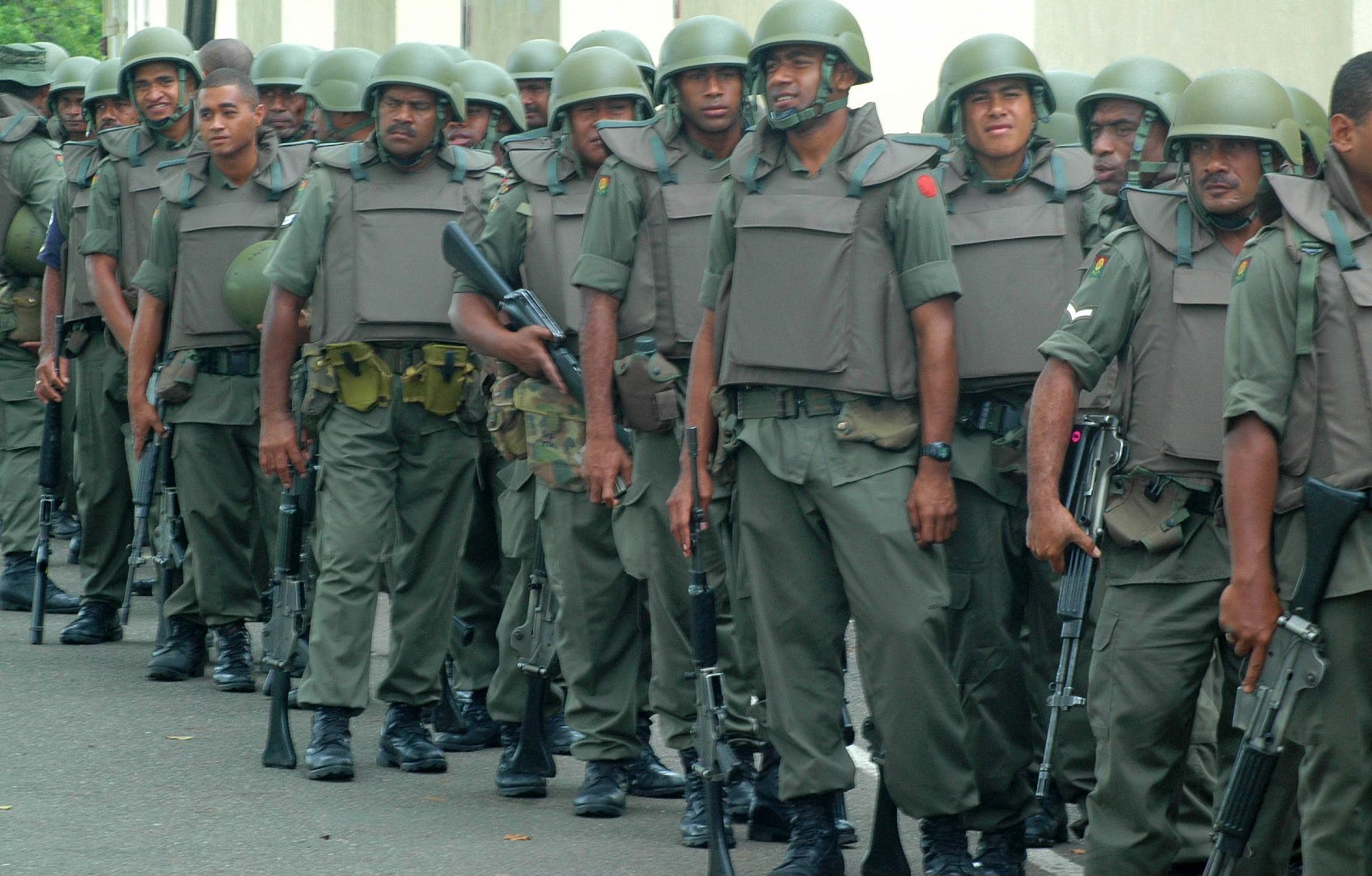
When a reputed drug dealer was hauled into an army camp and tortured to death, Fiji’s military commander, General Jone Kalouniwai, initially described it as a “medical emergency”.
Now he says it was never intended to end in death — an “incident” that went too far.
For the 58-year-old soldier, constitutionally, the most powerful figure in Fiji, the shifting explanations are shredding what little credibility he had left.
Also published: Empire of Empty Rocks
In 1983, Vanuatu’s only naval patrol boat, the Australian donated RVS Tukoro, sailed to the islands and removed plaques installed in 1975 by a French naval vessel, Bayonnaise, which marked the islands’ sovereignty. The Vanuatu flag was painstakingly planted in the rock. A few days later, the French navy returned to remove it.
The story behind the killing of Jone Vakarisi on April 17 is no longer simply about one man dying in military custody. It is becoming a test of whether Fiji’s military can tell the truth about itself.
Two days after Vakarisi’s violent death, Kalouniwai told the nation Vakarisi, had died of an unexplained medical event. Within hours, Vakarisi’s death certificate emerged, pointing to blunt force trauma. He had choked on his own vomit after being beaten. Two days later Kalouniwai issued another statement saying “the RFMF acknowledges that the earlier description of the incident as a ‘medical emergency’ does not fully reflect the medical findings now available.”
